

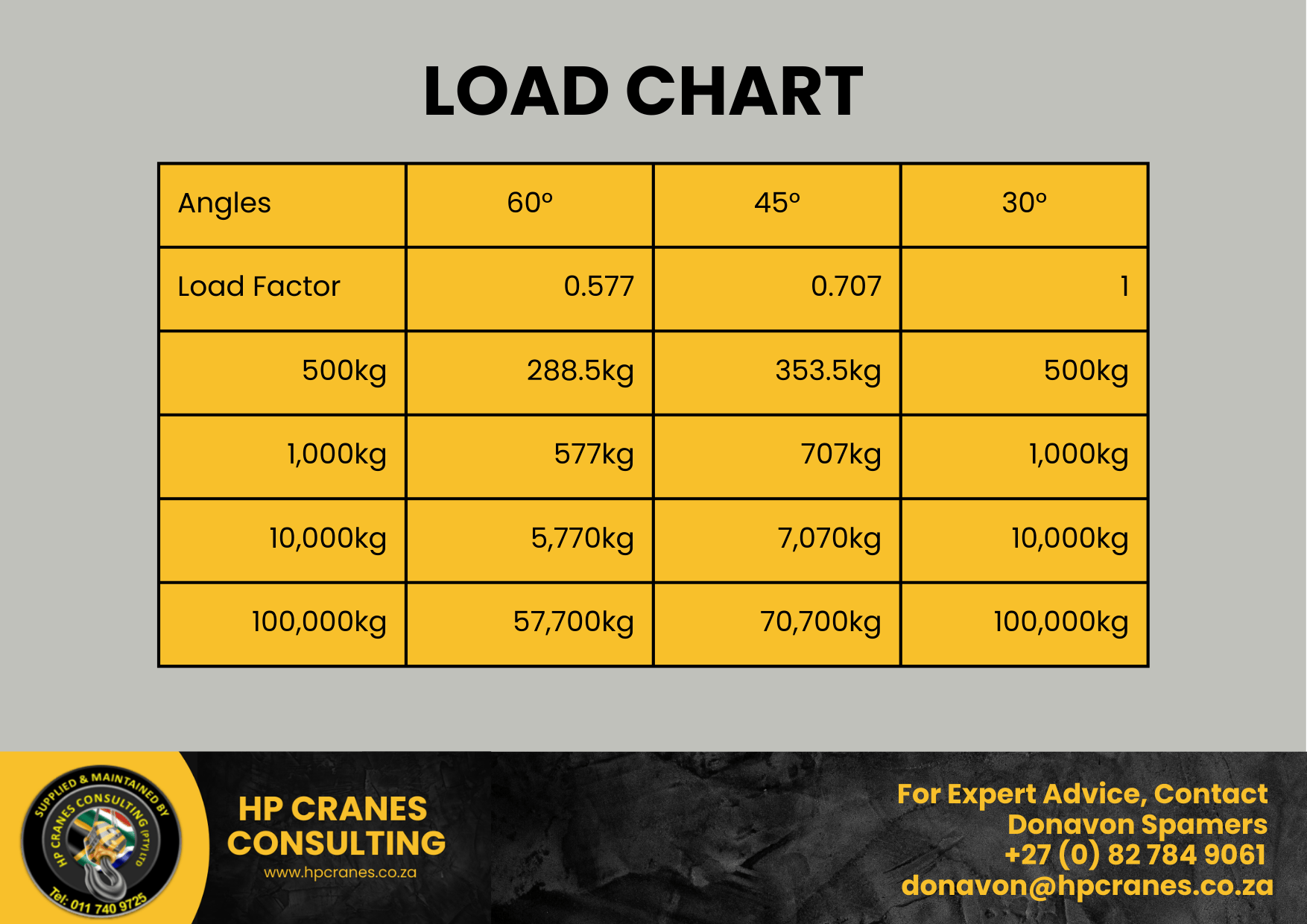

single angle load factor chart
In The Previous Blog Post, We Discussed Sling Angles And How A Few Degrees Can Change Everything. In This Blog Post, We Share With You The Load Factor Chart As A Quick-Reference Tool.
This Chart
Shows How Much Extra Load Each Sling Leg Carries As The Sling Angle Changes.
|
Angles |
60° |
45° |
30° |
|
Load Factor |
0.577 |
0.707 |
1.0 |
|
500kg |
288.5kg |
353.5kg |
500kg |
|
1,000kg |
577kg |
707kg |
1,000kg |
|
10,000kg |
5,770kg |
7,070kg |
10,000kg |
|
100,000kg |
57,700kg |
70,700kg |
100,000kg |
Reading The Chart
Look In The Left Column For The Load Factor And Then Follow That Line To The Angles That You Want To Calculate. There Are Also A Few Examples For A Quick Reference Guide.
To Figure Out How To Calculate The Weight And The Sling Angles, Read The Blog Post On The Importance Of Sling Angles.
Why It’s Important
When You Use The Load Factor, You’re Taking The Guesswork Out. You’re Making Sure The Slings, Shackles, Hooks, And Crane Are All Rated For The Real Forces At Play And Not Just The Weight Written On Paper.
A Small Angle Can Multiply The Load Fast, And The Chart Helps You Calculate The Values Before You Hook Up.
Quick Tips
· Always Check The Sling Angle Before The Lift.
· Use The Chart To Multiply The Real Load On Each Sling.
· Keep Angles Above 45° Wherever Possible.
· When In Doubt, Rather Check The Chart.
In The End, A Safe Lift Isn’t Just About Strength; It’s About Knowing The Numbers Behind It.